
⚡ TL;DR — Quick Summary
Artificial jewellery loses its shine because of moisture, sweat, perfume, and air. You can clean most pieces safely at home in under 15 minutes with household items.
- Mild soap + warm water — the safest all-rounder for any type.
- Baking soda + lemon paste — best for heavy tarnish on metal.
- White vinegar wipe — great for oxidised and plain metal pieces.
- Baby shampoo soak — the gentlest option for stone-set and kundan jewellery.
- Toothpaste — for plain chains and bangles only.
- Dry cloth buff — after every use, non-negotiable.
- Isopropyl alcohol wipe — for stubborn grime on metal parts.
Table of Contents
You put on your favourite pair of gold-plated jhumkas, and they look stunning. A month later, you pull them out of the drawer, and they have turned dull, streaky, or worse — slightly green. It happens to almost everyone who wears artificial jewellery regularly.
Here is the good news: you do not need an expensive jewellery cleaner or a trip to a professional. Most artificial jewellery responds beautifully to a few simple methods using things already in your kitchen — mild soap, baking soda, white vinegar, or even toothpaste. The trick lies in knowing which method suits which type of jewellery, because kundan and oxidised pieces need very different care from plain gold-plated chains.
This guide walks you through all seven safe cleaning methods, then maps each one to the jewellery type it works best on, so you never accidentally damage a beloved piece again.
Why Artificial Jewellery Loses Its Shine
Artificial jewellery — also called fashion jewellery or imitation jewellery — typically consists of a base metal (copper, brass, or zinc alloy) coated in gold, silver, rhodium, or another finish. Over time, several factors strip that coating and cause dullness or discolouration.
| What Causes It | What Happens to Your Jewellery | How Fast It Works |
|---|---|---|
| Moisture and sweat | Oxidation of the metal coating, leading to dullness and dark patches | Fast — within weeks of regular wear |
| Perfume and hairspray | Chemical reaction strips the plating faster | Very fast — each direct spray accelerates the process |
| Air exposure | Slow oxidation that turns metal dark or blackens it | Gradual — over months if stored open |
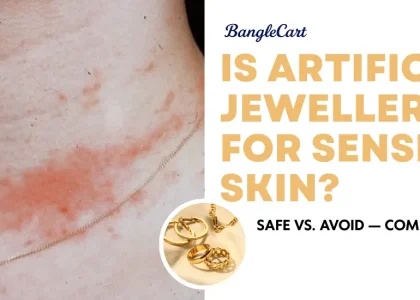
| Skin acidity | Copper in base metal reacts to produce green marks on skin and jewellery | Varies by individual skin chemistry |
| Improper storage | Humidity, dust, and scratches from other pieces | Gradual but cumulative |
💡 Good to Know
Artificial jewellery does not tarnish because it is low quality — it tarnishes because all metals oxidise. The better the base metal and plating quality, the longer it resists. An anti-tarnish finish and proper daily care can make a significant difference
How to clean artificial jewellery at home
You do not need any fancy items to clean your jewellery at home. Every item below costs under ₹100 or is likely already in your home.
| Supply | Used For | Where to Find It |
|---|---|---|
| Mild dish soap (like Vim liquid) | All-purpose wet clean | Kirana Store |
| Baby shampoo | Delicate stone-set pieces | Pharmacy Store |
| Baking soda | Removing heavy tarnish | Grocery Store |
| Lemon juice | Paired with baking soda for tarnish | Kitchen |
| White vinegar | Oxidised and plain metal pieces | Grocery Store |
| Plain white toothpaste | Plain chains and bangles | Pharmacy Store |
| 70% isopropyl alcohol | Stubborn grime on metal | Pharmacy Store |
| Soft-bristle old toothbrush | Scrubbing crevices | Home |
| Microfibre cloth | Drying and buffing | Variety Store |
| Small bowls | Mixing cleaning solutions | Kitchen |
⚠️ Never Use These on Artificial Jewellery
Bleach, harsh chemical cleaners, abrasive scrubbers, steel wool, hot water, ultrasonic cleaners (for stone-set pieces), and acetone (nail polish remover). All of these strip plating, dissolve adhesives, or crack stones permanently.
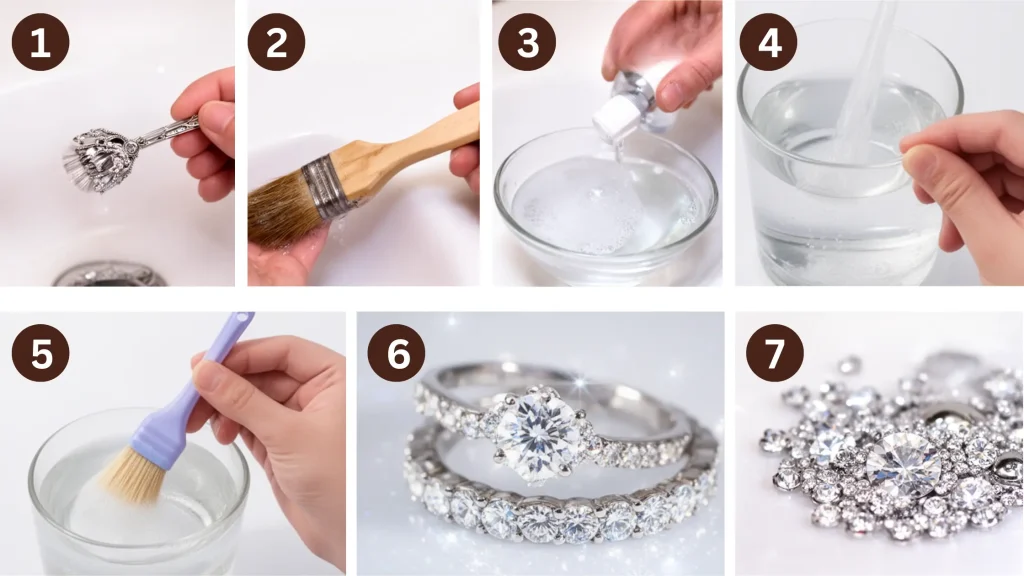
The 7 Safe Cleaning Methods
Each method suits different levels of dirtiness and different jewellery types. Start with the gentlest method (soap and water) before moving to stronger options.
Method 01 — Safest for All Jewellery Types
Mild Soap and Warm Water
This is your default cleaning method — gentle enough for almost any piece, effective for everyday grime and light dullness. When in doubt, start here.
- Fill a small bowl with lukewarm water. Add 3–4 drops of mild dish soap.
- Dip a soft toothbrush or microfibre cloth into the solution.
- Gently scrub the jewellery in small circular motions. Pay attention to crevices and joints.
- Rinse quickly under cool, running water. Do not let the piece soak.
- Pat completely dry with a microfibre cloth. Air-dry for 5 minutes before storing.
✅ Works on: Gold-plated, silver-toned, kundan, meenakari, AD, pearl — almost everything
Method 02 — Best for Heavy Tarnish
Baking Soda and Lemon Paste
Use this method when you notice dark patches, significant dullness, or visible tarnish on metal parts. The baking soda gently abrades the tarnish while the lemon juice lifts it away with its mild acidity.
- Mix 1 teaspoon of baking soda with enough lemon juice to form a thick paste.
- Apply the paste to the tarnished areas using a soft toothbrush or cotton bud.
- Leave it on for 1–2 minutes — no longer, as lemon is acidic.
- Gently scrub in small circular motions.
- Rinse immediately and thoroughly under cool water.
- Dry completely with a microfibre cloth. Even a little residual moisture can worsen tarnish.
✅ Works on: Plain gold-plated and silver-plated metal. NOT for stones, enamel, kundan, or pearls.
Method 03 — Great for Oxidised Pieces
White Vinegar Wipe
White vinegar dissolves surface oxidation without being harsh on metal. It works particularly well on oxidised (antique-finish) jewellery and plain metal bangles. Wipe, do not soak — this is the key distinction.
- Pour a small amount of white vinegar into a bowl.
- Dampen a soft cloth with vinegar. Squeeze out excess so the cloth is damp, not dripping.
- Wipe the jewellery surface in one direction — not back and forth.
- Immediately wipe dry with a clean, dry cloth.
- Leave the piece out to air-dry for 5 minutes before storing.
⚠️ Important: Do not soak oxidised jewellery in vinegar — it will strip the oxidised finish that gives the jewellery its signature dark-antique look. A quick wipe is all you need.
✅ Works on: Oxidised silver, plain metal, brass-finish pieces. Avoid on kundan, enamel, or pearl.
Method 04 — Gentlest Option for Delicate Pieces
Baby Shampoo Soak
Baby shampoo is pH-balanced and free of harsh chemicals, making it ideal for delicate stone-set jewellery, kundan work, and pieces where you want to avoid any risk of damage. It lifts dirt and oil gently from both metal and stone surfaces.
- Add 2 drops of baby shampoo to a bowl of lukewarm water. Stir gently.
- Place the jewellery in the solution for up to 60 seconds. Set a timer.
- Remove and use a very soft toothbrush to clean stone settings and crevices.
- Rinse under cool, gentle running water.
- Pat dry with a soft cloth and air-dry completely before storing in a pouch.
✅ Best for: Kundan, stone-set pieces, meenakari, polki, AD jewellery, delicate earrings.
Method 05 — For Plain Metal Chains and Bangles
Toothpaste Polish
Plain white toothpaste acts as a mild abrasive that polishes surface tarnish off plain metal. This method works well on chains, plain bangles, and simple metal earrings. Use it sparingly — once every few months at most.
- Use only plain white toothpaste — never gel, never whitening formula, never mint gel variants, as these have extra chemicals that can damage plating.
- Apply a pea-sized amount to a soft toothbrush.
- Scrub the metal surface gently in small circular motions for 30–60 seconds.
- Rinse very thoroughly. Toothpaste residue left in crevices continues to react with metal and can cause damage over time.
- Dry completely with a microfibre cloth.
⚠️ Important: Never use toothpaste on kundan, pearls, stones, or enamel work. The mild abrasive in toothpaste will scratch soft stones and damage delicate finishes.
✅ Best for: Plain gold-plated chains, bangles, plain metal earrings. Not for embellished pieces.
Method 06 — Your Daily Non-Negotiable
Dry Cloth Buff After Every Wear
This is the single most effective thing you can do to protect your jewellery — and it takes 10 seconds. After every time you wear your artificial jewellery, wipe it down with a clean, dry microfibre cloth before you put it away. This removes skin oils, sweat, perfume residue, and surface dust that would otherwise react with the metal overnight.
- Remove your jewellery and place it on a clean surface.
- Wipe all surfaces gently with a dry microfibre cloth.
- For textured pieces like jhumkas or kundan sets, use a soft dry brush to get into grooves.
- Store immediately in an airtight zip-lock bag or velvet pouch.
✅ Works on: All jewellery types. Do this after every single use, no exceptions.
Method 07 — For Stubborn Grime on Metal
Isopropyl Alcohol Wipe
When soap and water do not fully remove built-up grime — especially around clasps, earring posts, and heavily worked surfaces — 70% isopropyl alcohol provides a stronger clean. It evaporates quickly without leaving moisture behind, which makes it safer than water for certain metal parts.
- Dampen a cotton bud or cotton pad with 70% isopropyl alcohol (available at any pharmacy).
- Gently rub only the metal parts of the jewellery. Avoid direct contact with glued stones, enamel, and thread-worked sections.
- Let the piece air-dry for 2 minutes — the alcohol evaporates fast.
- Follow up with a dry cloth buff for a polished finish.
💡 Use Sparingly. Isopropyl alcohol is safe for metal, but use it no more than once a month. Frequent use can gradually weaken adhesives in stone-set pieces.
✅ Best for: Earring posts, clasps, plain metal crevices, and heavily soiled metal surfaces.
Cleaning by Jewellery Type: Your Quick-Reference Guide
Different finishes and materials need different approaches. Use this table to find the right method for your specific piece quickly.
| Jewellery Type | Best Method(s) | Frequency | What to Avoid |
|---|---|---|---|
| Gold-Plated (plain) Chains, bangles, plain earrings | Method 1 (soap + water) Method 2 (baking soda + lemon) for tarnish Method 5 (toothpaste) sparingly | Wet clean every 2–4 weeks; dry buff after every use | Prolonged soaking, bleach, abrasive scrubbers |
| Kundan Jewellery Traditional glass-stone set in wax | Method 4 (baby shampoo) — 60-second max soak Method 1 (soap + water) with cloth only, no soaking | Dry buff after every use; wet clean once a month if worn often | Soaking, vinegar, toothpaste, baking soda, isopropyl alcohol near stones |
| Oxidised Jewellery Antique dark-finish silver/brass | Method 3 (white vinegar wipe) Method 6 (dry cloth buff) | Dry buff after every use; vinegar wipe once a month | Baking soda, lemon — these remove the oxidised finish. Soaking. |
| AD / American Diamond Cubic zirconia stones in metal | Method 1 (soap + water) Method 4 (baby shampoo) | Wet clean every 2–3 weeks; dry buff after use | Harsh abrasives, hot water, ultrasonic cleaners |
| Pearl Jewellery Real or faux pearl strings/sets | Method 6 (dry cloth only) Damp cloth with plain water if needed | Dry buff every time. Avoid wet cleaning as much as possible. | All chemical methods. Acids, alcohol, soap — all damage pearl surfaces. Never soak. |
| Meenakari / Enamel Coloured enamel work | Method 1 (soap + water) with a cloth, no scrubbing Method 4 (baby shampoo) | Dry buff after use; gentle wet clean monthly | Vinegar, baking soda, toothpaste, hard-bristle brushes — all chip enamel |
| Thread / Fabric Jewellery Silk thread jhumkas, tassel earrings | Method 6 (dry brush only) for the metal parts Air-dry the fabric portions | Spot-clean only; never submerge | All wet methods — moisture rots threads and warps fabric |
✅ The Golden Rule
When unsure which method to use, always pick the gentlest option first. Mild soap and water will not harm any piece. You can always try a stronger method after, but you cannot reverse damage caused by the wrong one.
Common Cleaning Mistakes — and How to Avoid Them
Most jewellery damage from home cleaning happens because of avoidable mistakes. Here is what to watch out for.
✅ Do This
- Dry your jewellery completely before storing
- Use a soft-bristle brush for crevices
- Clean by jewellery type, not a one-size-fits-all approach
- Remove jewellery before bathing, swimming, or applying perfume
- Buff with a dry cloth after every single use
- Store each piece separately in a zip-lock bag or velvet pouch
- Work in good light so you can see what you are cleaning
❌ Never Do This
- Soak jewellery for long periods — even 5 minutes weakens adhesives
- Use gel toothpaste — it contains chemicals that strip plating
- Clean kundan or pearl with acid-based solutions (vinegar, lemon)
- Scrub hard — circular motion, light pressure is always enough
- Store jewellery while still damp — moisture speeds up tarnish
- Spray perfume or deodorant while wearing jewellery
- Use the same method on all piece types without checking the table above
The Perfume Rule: Why It Matters More Than You Think
One of the fastest ways to ruin a gold-plated piece is to spray perfume or hairspray while wearing it. The alcohol and chemicals in these products react with the metal coating and accelerate tarnish dramatically. The rule to follow: put your jewellery on last, after you have finished applying all sprays and products. Remove it first before you shower or reach for skincare. This one habit alone will extend the life of your jewellery significantly.
Want Jewellery That Needs Less Cleaning?
Our anti-tarnish collection uses advanced plating that resists moisture, sweat, and daily wear — so your jewellery stays beautiful far longer.
Browse Collection →
How to Store Artificial Jewellery After Cleaning
Cleaning your jewellery is only half the job. Proper storage after cleaning prevents tarnish from returning quickly and keeps your pieces safe from scratches and humidity.
The Three Storage Rules
Rule 1 — Airtight is everything. Exposure to air is the primary cause of tarnish. Store each piece in a zip-lock bag with the air pressed out, or in a velvet-lined, sealed box. A silica gel packet inside the storage box or bag absorbs moisture and slows oxidation considerably.
Rule 2 — Store separately. Metal pieces scratch each other. Keep necklaces, earrings, and bangles in separate pouches or compartments. Never toss multiple pieces into one bag together.
Rule 3 — Keep away from heat and light. Direct sunlight and heat accelerate oxidation and fade enamel colour. Store your jewellery in a drawer or box away from windows — not on a dresser top in direct sunlight.
Cheap Hacks That Actually Work in Indian Homes
You do not need an expensive jewellery box. Zip-lock bags work perfectly — press out the air before sealing. A plastic pill organiser makes a great daily-wear earring holder. Line the compartments with a small square of velvet fabric for added protection. If you have silica gel packets from shoe boxes or medicine packaging, drop one into each storage bag. They are reusable — just dry them in the sun for an hour to reset their moisture-absorbing capacity.
📎 Related Reading
Office Wear Artificial Jewellery Under ₹700 →
The Charm of Artificial Jewellery
How to Choose the Perfect Jewellery for Every Occasion
Artificial Jewellery: The Smarter Style Choice in 2025
Artificial Jewellery That Does Not Turn Black:
https://banglecart.in/blog-i-wore-banglecart-jewellery/
Frequently Asked Questions
Can I use toothpaste to clean artificial jewellery?
Yes, but use only plain white toothpaste — never gel, whitening, or coloured varieties. Use it only on plain metal chains and bangles. Avoid applying it anywhere near stones, enamel work, kundan settings, or pearl pieces. The mild abrasive in plain toothpaste polishes metal well, but it will scratch softer surfaces.
How often should I clean my artificial jewellery?
Buff your jewellery with a dry cloth after every use — this is the daily minimum. Do a gentle wet clean once every 2–4 weeks for pieces you wear regularly. If you wear a piece occasionally, clean it before storing after wear and once every 2–3 months in storage
Can I soak artificial jewellery in water?
Avoid soaking for extended periods. Moisture weakens the adhesives in stone-set pieces, warps thread-based jewellery, and speeds up tarnish. If you use a water-based cleaning method, limit water contact to under 60 seconds and dry the piece immediately and thoroughly afterwards.
Why does my artificial jewellery turn black or green?
Artificial jewellery turns black due to oxidation — the metal coating reacts with air, sweat, and perfume. It turns green because the copper in the base metal reacts with moisture and acids from your skin, creating copper salts (that green-blue residue). Both are natural chemical reactions. Anti-tarnish plating, dry storage, and regular cleaning slow both processes significantly.
What is the best way to remove tarnish from artificial jewellery at home?
The baking soda and lemon paste method (Method 2) works best for significant tarnish on plain metal. Mix 1 teaspoon of baking soda with a few drops of lemon juice, apply with a soft toothbrush, scrub gently for 1–2 minutes, then rinse and dry thoroughly. For lighter dullness, mild soap and water usually does the job.
How do I clean kundan jewellery at home without damaging the stones?
Kundan stones sit in a wax-based setting, so avoid anything acidic, abrasive, or involving prolonged soaking. Use Method 4 — a 60-second baby shampoo soak followed by gentle toothbrush cleaning and thorough drying. Never use vinegar, baking soda, or lemon on kundan. Keep the back of the piece (often gilded foil) completely dry.
Can I clean oxidised jewellery the same way as gold-plated jewellery?
No. Oxidised jewellery has an intentional dark, antique finish. If you use baking soda, lemon, or toothpaste, you will strip this finish and the piece will look patchy. Use only the white vinegar wipe method (Method 3) or a plain damp cloth. Avoid soaking and strong abrasives entirely
Is it okay to clean artificial jewellery with hand sanitiser?
Not recommended. Most hand sanitisers contain 60–70% alcohol along with added fragrances, moisturisers, and other compounds that can damage finishes, adhesives, and stone settings. If you want an alcohol-based option, use pure 70% isopropyl alcohol (Method 7) on metal parts only — not hand sanitiser.
Shop Jewellery Built to Last
Our collections use premium anti-tarnish plating that holds up to daily Indian weather — humidity, sweat, and all. Free shipping on orders above ₹499.
Explore the Full Collection →