
TL;DR — Quick Summary
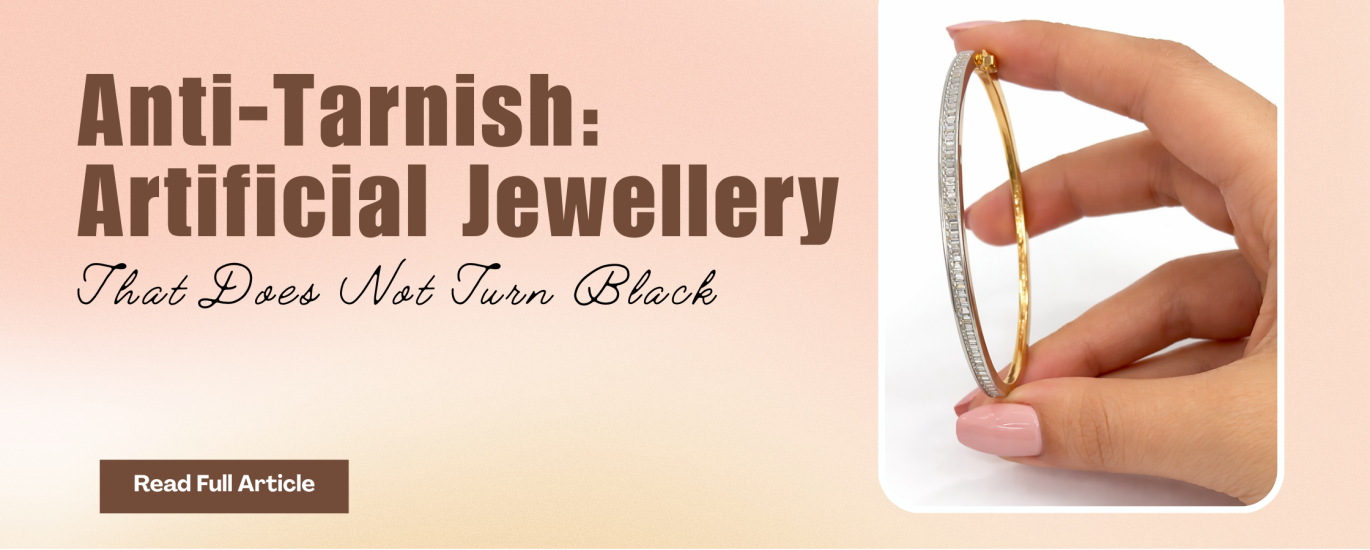
Thinking about artificial jewellery that does not turn black? Your artificial jewellery turns black or green because of the base metal reacting with air, sweat, and moisture. The fix is simple — choose the right material from the start.
- Surgical-grade stainless steel (316L) — tarnish-proof, hypoallergenic, best for daily wear.
- Rhodium-plated jewellery — the brightest, most tarnish-resistant plating available.
- Titanium — the lightest, strongest, and most rust-proof metal.
- Gold vermeil (2.5 microns+) — real gold over sterling silver. Last year, not weeks.
- Anti-tarnish lacquer coating — adds 6–18 months of extra protection to any piece.
- Avoid: Thin gold-plated copper base, brass-base without coating, and nickel-heavy alloys.
👇 Scroll to the Metal Comparison Table to find the right material for your budget.
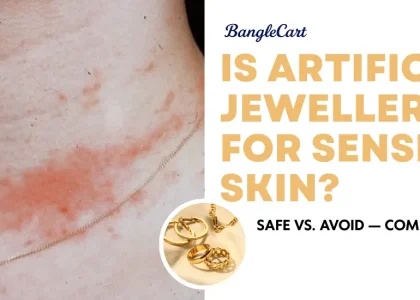
You spend ₹800 on a pair of gold-look earrings. They look beautiful on Day 1. By Week 3, they have turned dull, patchy, and slightly black around the hooks. A month later, they leave a faint green mark on your earlobe. You throw them out and buy another pair — and the cycle repeats.
This is not a quality problem. It is a material problem. And most jewellery brands never explain it because doing so would mean telling you exactly what their pieces are made of.
This guide breaks down the science simply: which metals and coatings resist tarnishing, which ones cause it, how to spot the difference before you buy, and what genuine anti-tarnish artificial jewellery looks like. Read this once, and you will never waste money on pieces that turn black again.
Why Artificial Jewellery Turns Black or Green
Almost all artificial jewellery uses a base metal — the core material underneath the shiny surface — coated with a thin layer of gold, silver, or another finish. The base metal determines how long your jewellery stays bright. The coating only delays the inevitable reaction; it does not stop it permanently.
Two chemical reactions cause the discolouration you see:
Reaction 1 — Oxidation (Turns Jewellery Black)
When the base metal (usually copper or brass) is exposed to oxygen, moisture, and sweat, it oxidises. This forms a layer of dark metal oxide on the surface — the same chemistry that turns a copper coin dark over time. The black or dark brown colour you see on old earring hooks and chain links is this oxide layer.
Reaction 2 — Copper Salt Formation (Turns Skin and Jewellery Green)
When copper-based metals react with the weak acids present naturally in sweat and skin, they form copper salts — a bluish-green compound. This is the same reaction that gives old copper rooftops their green patina. When it happens on your skin, it leaves that familiar green ring. When it happens to jewellery, it gives pieces a greenish tinge.
💡 The Key Insight: The plating colour (gold-look, silver-look) tells you nothing about tarnish resistance. The base metal does. A gold-coloured piece made on a copper base turns black just as fast as a copper piece. A silver-coloured piece on a stainless steel base never tarnishes at all.
The thickness of the plating only affects how quickly the base metal shows through — thicker plating means more time before tarnish appears, but it always appears eventually if the base metal is reactive. The permanent solution is to use a non-reactive base metal from the start.
4 Metals in Artificial Jewellery That Do Not Tarnish
These four materials resist tarnishing under normal wear conditions. Each has different properties that suit different budgets and use cases.
Metal 01 — Best for Daily Wear
Surgical-Grade Stainless Steel (316L)
Stainless steel is the most practical anti-tarnish material for everyday artificial jewellery in India. The “316L” grade — also called surgical steel — contains chromium that forms a passive oxide layer on the surface. This layer is self-repairing: if scratched, it regenerates in air. The result is a metal that resists tarnish, rust, and corrosion even in humid conditions and daily sweat exposure.
- Tarnish resistance: Excellent. Does not turn black, green, or rust under normal wear.
- Skin safety: Hypoallergenic. Safe for sensitive skin and pierced ears.
- Water resistance: Fully waterproof. Safe through handwashing and light rain.
- Durability: Lasts 5+ years with basic care. Does not bend or break easily.
- Price range: ₹299–₹1,500 for most pieces. Excellent value for money.
- Ideal for: Daily-wear earrings, rings, bracelets, and chains.
✅ Recommended — Best everyday choice
Metal 02 — Brightest & Most Tarnish-Resistant Plating
Rhodium-Plated Jewellery
Rhodium is a rare precious metal from the platinum family. It is the most reflective metal on earth and naturally resists tarnish, corrosion, and scratching better than any other plating material. When a piece of artificial jewellery carries rhodium plating — even over a brass or copper base — it stays brighter for significantly longer than standard gold or silver plating.
Look for pieces labelled “rhodium-plated” or “rhodium finish.” The coating extends life considerably, though it does eventually wear off on high-friction areas like ring shanks. When that happens, the piece needs re-plating.
- Tarnish resistance: Very high. Rhodium itself never tarnishes. Stays bright even with daily wear.
- Appearance: Brilliant white-silver shine. Used in most high-end artificial jewellery.
- Durability: 1–3 years before re-plating is needed on frequently worn pieces.
- Price range: ₹500–₹3,000. Slightly higher than uncoated pieces, worth the premium.
- Ideal for: Earrings, necklaces, kundan-set pieces, bridal jewellery.
✅ Recommended — Best finish for special-occasion pieces
Metal 03 — Lightest & Strongest
Titanium
Titanium is the only metal that is simultaneously as strong as steel, as light as aluminium, and completely inert — meaning it does not react with skin, moisture, air, or sweat at all. It is the material of choice for medical implants and aerospace components, and it brings the same properties to jewellery.
Titanium jewellery is still less common in India than stainless steel, but availability is growing quickly. It is particularly popular in earring studs and hoops because of its near-zero weight and complete skin safety.
- Tarnish resistance: Exceptional. Never turns black, green, or rust. Ever.
- Weight: 45% lighter than steel. Ideal for large earrings worn all day.
- Skin safety: The most hypoallergenic material available. Zero reactions.
- Water resistance: Fully waterproof. Safe in salt water, chlorine, and rain.
- Price range: ₹400–₹2,000 for most pieces.
- Ideal for: Earring studs, small hoops, everyday minimal jewellery.
✅ Recommended — Best choice for sensitive skin
Metal 04 — Premium Look with Lasting Shine
Gold Vermeil (Thick Gold over Sterling Silver)
Gold vermeil (pronounced vur-MAY) is real gold plating over a sterling silver base — not copper, not brass. The key difference from regular gold plating is the base metal quality and the plating thickness. Standard gold plating is 0.5 microns over copper. True gold vermeil is a minimum of 2.5 microns of real gold over 92.5% sterling silver.
Because silver is far less reactive than copper or brass, and because the plating is significantly thicker, gold vermeil pieces hold their colour and shine for years rather than weeks. This is the material used in authentic fashion jewellery brands that charge a premium.
- Tarnish resistance: Good to excellent. Lasts 2–5 years with proper care.
- Appearance: Rich warm gold colour. Looks closest to real gold jewellery.
- Price range: ₹800–₹4,000 for most pieces. Higher than standard plating.
- What to verify: Ask for a minimum 2.5 micron gold thickness and 925 sterling silver base before buying.
- Ideal for: Necklaces, bangles, rings, pieces you want to wear for years.
⚠️ Watch Out for This: Many sellers label regular copper-base gold-plated pieces as “vermeil” incorrectly. True vermeil must use a sterling silver base. If a piece is priced under ₹500 and claims to be vermeil, it almost certainly is not. Ask for the base metal specification.
💡 Recommended — Best for a premium everyday look
Metals That Cause Blackening — Avoid These
These materials are not inherently bad — they are inexpensive and widely used. The problem is they tarnish quickly, especially in India’s humid climate, and many brands use them without disclosure.
⚠️ Avoid — Tarnishes Fastest
Copper-Base Jewellery (Thin Gold or Silver Plating)
Copper is the most common base metal in budget artificial jewellery. It is cheap, easy to mould, and takes plating well. It is also the primary culprit behind both blackening and green skin marks. Once the thin surface plating wears off — which happens within weeks of daily wear — the copper base oxidises rapidly and leaves marks on both the jewellery and your skin.
Most jewellery sold under ₹300–400 in India uses a copper base. The giveaway: a distinctive copper-orange colour on the inside of the piece, earring hooks, or clasps where the plating is thinnest.❌ Avoid for daily wear — tarnishes within weeks
⚠️ Caution — Tarnishes Moderately
Brass-Base Jewellery
Brass (a copper-zinc alloy) tarnishes more slowly than pure copper and is used in mid-range artificial jewellery. It has a warmer, more golden tone than copper and takes plating more evenly. However, it still oxidises with exposure to moisture and sweat, particularly at contact points like earring wires and ring undersides.
Brass-base jewellery with a quality anti-tarnish lacquer coating, or with rhodium plating, holds up much better. Uncoated brass-base pieces are fine for occasional wear but not for daily use in humid conditions.⚠️ Caution — Acceptable with anti-tarnish coating, not ideal for daily wear, uncoated
⚠️ Avoid — Causes Skin Reactions
Nickel Alloys
Nickel-heavy alloys were standard in budget jewellery for decades. Nickel itself does not tarnish quickly, but it is a very common allergen — the leading cause of contact dermatitis from jewellery worldwide. Symptoms include itching, redness, small blisters, and rash at the contact point, most commonly on earlobes, fingers, and wrists.
The European Union banned nickel in jewellery contact with skin in 1994. India has no such formal regulation, so nickel-containing pieces remain widely sold. If you experience skin reactions after wearing jewellery, nickel is the most likely cause.❌ Avoid — Causes skin allergies in many people
The Full Comparison Table: Every Material at a Glance
Use this table to quickly compare materials when you are evaluating a purchase. Bookmark it for reference.
| Material | Tarnish Resistance | Skin Safe? | Water Safe? | Durability | Price Range (India) | Verdict |
|---|---|---|---|---|---|---|
| Stainless Steel 316L | ★★★★★ Excellent | ✅ Yes | ✅ Fully | 5+ years | ₹299–₹1,500 | ✅ Best Buy |
| Rhodium Plated | ★★★★☆ Very High | ✅ Yes | ⚠️ Avoid soaking | 1–3 years | ₹500–₹3,000 | ✅ Highly Recommended |
| Titanium | ★★★★★ Excellent | ✅ Best | ✅ Fully | 5+ years | ₹400–₹2,000 | ✅ Best for Sensitive Skin |
| Gold Vermeil (2.5µ+) | ★★★★☆ Good | ✅ Yes | ⚠️ Avoid soaking | 2–5 years | ₹800–₹4,000 | ✅ Premium Choice |
| Brass + Anti-Tarnish Coat | ★★★☆☆ Moderate | ⚠️ Usually | ❌ No | 6–18 months | ₹200–₹1,200 | ⚠️ Occasional Wear OK |
| Copper Base (Gold Plated) | ★★☆☆☆ Poor | ⚠️ Usually | ❌ No | 2–6 weeks daily wear | ₹99–₹400 | ❌ Avoid for Daily Use |
| Nickel Alloy | ★★★☆☆ Moderate | ❌ Allergenic | ⚠️ Partial | Varies | ₹99–₹600 | ❌ Avoid — Causes Reactions |
✅ The Bottom Line: For daily wear in India’s humid climate, choose stainless steel 316L or titanium. For special occasions and bridal looks: rhodium-plated pieces. For a premium everyday gold look: gold vermeil with 2.5 microns minimum. For budget occasional wear: brass with anti-tarnish lacquer coating — but remove after use and store in an airtight pouch.
5 Buying Tips for Anti-Tarnish Artificial Jewellery That Actually Lasts
Tip 01
Always Ask: What Is the Base Metal?
This is the single most important question you can ask any jewellery seller — online or offline. A brand that sells genuinely long-lasting anti-tarnish artificial jewellery will answer this question confidently and specifically. If the answer is vague (“it’s high quality” or “it won’t tarnish, trust me”), treat that as a no.
Tip 02
Check Plating Thickness When Buying Gold-Plated Pieces
Standard gold plating is 0.5 microns or less — it lasts 2–4 weeks of daily wear before wearing off. Anti-tarnish gold plating starts at 1–2 microns. Gold vermeil starts at 2.5 microns. Ask for the micron thickness in writing if you are making a significant purchase. Brands that use thick plating advertise it — brands that use thin plating never mention it.
Tip 03
Look for “Anti-Tarnish Lacquer” or “E-Coat” as a Bonus
Many quality artificial jewellery brands apply an additional anti-tarnish lacquer or electrophoretic coating (e-coat) over the plating. This invisible protective layer slows the reaction between the plating and the environment. It adds 6–18 months of extra protection. Look for this in product descriptions — it signals a brand that pays attention to longevity.
Tip 04
Pay More for Daily Wear Pieces — Spend Less on Occasional Wear
A pair of earrings you wear every day to work needs to be stainless steel or rhodium-plated on a quality base. A statement necklace you wear once a month for weddings can be a beautiful brass-base piece with a thick plating — the infrequent wear means it lasts fine. Match your material choice to your wear frequency, and your per-wear cost drops significantly.
Tip 05
Read Reviews Specifically for Tarnishing — Not Just Looks
Before buying from any brand online, filter reviews by keywords like “tarnish,” “black,” “green,” or “lasted.” Customer reviews that mention how long a piece stayed bright are the most honest signal about material quality you can find. A beautiful product photo means nothing if the reviews report tarnishing within two weeks.
Shop Anti-Tarnish Jewellery That Actually Lasts
Every piece in our anti-tarnish collection specifies the base metal, plating thickness, and coating type — because we believe you deserve to know what you are buying.
Browse Anti-Tarnish Collection →
Care Habits That Extend Any Jewellery’s Life
Even the best anti-tarnish artificial jewellery lasts longer with the right daily habits. These rules apply to every material.
✅ Always Do This
- Put jewellery on last — after perfume, hairspray, and lotion
- Remove jewellery before showering, swimming, or exercising
- Wipe each piece with a dry microfibre cloth after every wear
- Store each piece separately in an airtight zip-lock bag or velvet pouch
- Keep silica gel packets in your jewellery box to absorb moisture
- Remove rings before washing hands with soap
- Keep jewellery away from direct sunlight and heat
❌ Never Do This
- Spray perfume or deo directly on or near jewellery while wearing it
- Store multiple pieces loose together — they scratch each other
- Leave jewellery in the bathroom — steam and humidity accelerate tarnish
- Wear jewellery while cooking — oil and heat damage coatings
- Sleep with jewellery on — sweat and pillow friction wear coatings faster
- Use hand sanitiser while wearing rings — alcohol strips plating
- Clean with bleach or nail polish remover — both destroy coatings instantly
🎯 The Verdict
The best anti-tarnish artificial jewellery is not about spending more — it is about spending smarter. A ₹599 stainless steel earring worn daily for two years costs ₹0.82 per day. A ₹199 copper-base earring that turns black in three weeks and goes in the bin costs ₹9.50 per day.
Material matters more than brand. Base metal matters more than surface colour. And a two-minute care routine after every use extends even ordinary pieces far beyond their expected life. Start with the right material, care for it correctly, and your jewellery stays beautiful for years, not weeks.
📎 Related Reading
- How to Clean Artificial Jewellery at Home: 7 Safe Methods →
- Office Wear Artificial Jewellery Under ₹700 →
- The Charm of Artificial Jewellery
- How to Choose the Perfect Jewellery for Every Occasion
- Artificial Jewellery: The Smarter Style Choice in 2025
- Gem Jewellery in Fashion: The Sparkle That Never Fades →
- https://banglecart.in/blog-i-wore-banglecart-jewellery/
Frequently Asked Questions
Which artificial jewellery does not turn black?
Artificial jewellery made with surgical-grade stainless steel (316L), rhodium plating, titanium, or gold vermeil (2.5 microns+ over sterling silver) does not turn black under normal wear conditions. These materials resist the oxidation caused by moisture, sweat, and air. Avoid copper-base or brass-base pieces without protective coatings if you want jewellery that stays bright long-term
Why does artificial jewellery turn black or green?
Artificial jewellery turns black because the base metal — usually copper or brass — oxidises when it reacts with air, moisture, and sweat. It turns green because copper in the base metal reacts with the mild acids in your skin to form copper salts. Thicker plating slows this reaction, but the permanent solution is choosing a non-reactive base metal like stainless steel or titanium from the start.
Is stainless steel artificial jewellery safe to wear daily?
Yes. Surgical-grade stainless steel (316L) is hypoallergenic, tarnish-proof, rust-resistant, and completely safe for daily wear — including in India’s humid climate. It does not cause skin reactions, does not turn black or green, and requires very minimal maintenance. It is one of the best materials for everyday artificial jewellery.
Does anti-tarnish coating actually work?
Yes, but for a limited time. A quality anti-tarnish lacquer or e-coating creates a protective barrier that prevents air and moisture from reaching the metal beneath. This extends the life of a piece by 6–18 months compared to uncoated jewellery. The coating eventually wears off with daily use, after which your care habits determine how long the piece stays bright.
What is the difference between anti-tarnish and waterproof jewellery?
Anti-tarnish means the jewellery resists discolouration from air, moisture, and sweat. Waterproof means the piece survives direct water exposure — rain, handwashing, even swimming — without damage. Stainless steel and titanium are both anti-tarnish and waterproof. Gold-plated anti-tarnish jewellery resists tarnish but is not recommended for prolonged water exposure.
How long does anti-tarnish artificial jewellery last?
With proper care, high-quality anti-tarnish artificial jewellery lasts 1–3 years of regular daily wear. Stainless steel and titanium pieces last 5 years or more. The lifespan depends on the base metal quality, plating thickness, and how consistently you follow the care habits — storing in airtight pouches, removing before showering, and wiping down after every use.
Can I shower or swim with anti-tarnish artificial jewellery?
Stainless steel and titanium pieces handle showering and brief water exposure fine. Gold-plated anti-tarnish pieces should not go into chlorinated pools or salt water — both strip plating faster. Remove all jewellery before applying soap, shampoo, or conditioner. These chemicals degrade protective coatings over time, even on quality pieces.
Which anti-tarnish artificial jewellery is best for Indian skin?
Indian skin tends to be slightly more acidic, which accelerates tarnishing and increases the chance of green marks from copper-base jewellery. Surgical-grade stainless steel (316L) and rhodium-plated pieces are the safest and most durable choices for Indian skin conditions. Both resist the sweat and skin acids common in a warm climate, and neither causes allergic reactions.
Ready to Stop Replacing Jewellery Every Few Weeks?
Our anti-tarnish collection tells you exactly what each piece is made of — base metal, plating type, and coating. Shop with confidence. Free shipping on orders above ₹499.